For years, the "entry fee" for AI was millions of labeled examples. If you didn't have a massive dataset, you didn't have a model. But as we move through 2026, that barrier is being dismantled by a shift toward Generalization Heuristics. We’ve realized that a model doesn't need to see ten thousand pictures of a "new" species of bird if it already understands the fundamental geometry of wings, beaks, and feathers. By leveraging Meta-Learning and Few-Shot Prompting, modern systems can now bridge the gap between "known" and "unknown" using only two or three examples. This isn't just a shortcut; it’s a fundamental change in how we define algorithmic intelligence—shifting from rote memorization to high-speed cognitive transfer.

The Meta-Learning Layer: Learning to Learn
In 2026, we don't just train models on tasks; we train them on the process of solving tasks. This is Meta-Learning. Instead of a single, rigid objective, the model is presented with thousands of small, diverse problems during its initial development. It learns that "learning" usually follows a specific pattern: identify the core features, ignore the noise, and map the output to a known category.
When you present a meta-trained model with a totally new challenge—like identifying a rare industrial defect it has never seen before—it doesn't start from zero. It activates its "learning-to-learn" circuitry. It looks at the two or three "support" examples you provide and identifies the statistical delta—what makes these examples different from everything else it knows. It then adjusts its internal "attention" to focus exclusively on those differences. In 2026, the real power of an AI isn't what it knows, but how quickly it can discard what it doesn't need to know to solve the problem at hand.
Latent Space Mapping: Navigating the Semantic Neighborhood
How does a machine know that a "whatpu" is a small, furry animal if it’s only seen one sentence about it? It uses Latent Space Mapping. Every concept the AI has ever learned—from "fur" to "Tanzania"—exists as a coordinate in a massive, multi-dimensional mathematical universe. When you provide a single new example, the AI doesn't create a new category from scratch. Instead, it finds the "neighborhood" where that new concept lives.
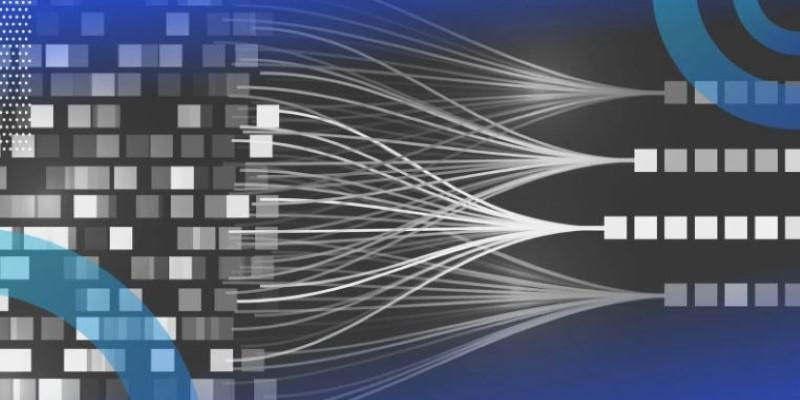
[Image showing a high-dimensional vector space with new data points clustering near known concepts]
It’s like being dropped into a new city and realizing that even though you don't know the specific street names, you know you're in the "financial district" because of the architecture and the way people are dressed. The AI realizes that the "whatpu" is located at the intersection of "mammal," "small," and "East African fauna." It fills in the blanks of its knowledge by borrowing attributes from the surrounding concepts. This is why 2026 models are so good at Zero-Shot and One-Shot learning; they aren't guessing in the dark—they are navigating a pre-mapped world where nothing is truly "new."
N-Way K-Shot Frameworks: The Geometry of Comparison
In the engineering labs of 2026, we measure generalization through the N-way K-shot framework. "N" is the number of new classes the model has to learn, and "K" is the number of examples (or "shots") provided for each. A "5-way 2-shot" problem is the ultimate test of an AI’s ability to generalize. It has to distinguish between five new things using only two pictures of each.
To solve this, the model uses Metric-Based Learning. It calculates the "distance" between the new examples in its vector space. It builds a "prototype" for each new category—a mathematical average of the two examples. When it sees a third, unknown image, it simply measures which prototype it is closest to. This geometric approach to logic is incredibly efficient. It allows us to deploy AI in "low-data regimes" like rare disease research or forensic linguistics, where collecting thousands of samples is a physical impossibility.
Collapsing the Training Cycle with In-Context Learning
One of the most practical applications of generalization in 2026 is In-Context Learning (ICL). We’ve stopped retraining models every time we need a new task. Instead, we use the "Context Window" as a temporary training ground. By providing a few "demonstrations" within the prompt itself—such as "Input: Positive, Output: Happy" or "Input: Negative, Output: Sad"—we "prime" the model's existing knowledge to align with a specific task.
This doesn't change the model's weights; it just shifts its focus. It’s like a professional musician who can sight-read a new piece of music instantly because they understand the theory behind the notes. The AI uses the prompt examples as a "tuning fork" to find the right frequency for its response. This allows businesses to build specialized tools in minutes rather than months. If you can describe the task and provide three good examples, the 2026 model can generalize the rest of the logic on the fly.

Whether we’re talking about the recursive loops of meta-learning or the way we map high-dimensional latent spaces, the end goal is exactly the same: a machine that doesn't panic when the data is thin. As these generalization techniques get more refined, the massive cost and time-sink of AI development are going to plummet. We are basically pre-equipping these models with a blueprint of reality, so they can look at a single example and say, "Okay, I get it." The future of the field isn't in how much data we can cram into a box, but in how much wisdom the machine can carry over from one task to the next.
The Shift from Data Gluttony to Cognitive Efficiency
We’re finally moving past the era of "brute force" AI. The old-school belief that intelligence requires an infinite, bottomless supply of data is dying out in favor of a much more "human" approach to logic. By 2026, the industry has realized that real intelligence isn't about memorizing every possible scenario; it’s about having the mental scaffolding to handle something you’ve never seen before.