Artificial Intelligence has shifted from lab experiments to shaping everyday life. Whether it's automating tasks, powering recommendation systems, or quietly shaping public policy, AI is embedded in the way society functions. This evolution has sparked both curiosity and concern—and filmmakers are catching up.
The latest documentaries don’t just explain what AI is but focus on who it affects and how. In 2025, a new crop of artificial intelligence documentaries explores its impact on people, ethics, work, and our perception of intelligence itself—with clarity, urgency, and a human touch.
Top 6 Artificial Intelligence Documentaries in 2025
Code Unknown: The Human Side of AI
“Code Unknown” puts people at the center of its story. Instead of diving into software architecture or model types, it captures how AI decision-making affects ordinary lives. Viewers meet students who were penalized by automated plagiarism detectors, workers rejected by job screening software, and low-income families flagged by opaque risk scoring systems.
Experts interviewed throughout the film explain how these systems are designed, often revealing how flawed or incomplete training data can reinforce bias. But rather than presenting AI as a villain, the film leans into the idea that oversight and more inclusive design can improve outcomes. It presents a clear call for accountability and reminds us that any AI system will always reflect the values of those who build it.
Machine States
This documentary looks at AI’s connection to state power and global conflict. Governments are now using machine learning not only for efficiency but for control—from biometric tracking at borders to predictive policing and AI-assisted warfare. “Machine States” lays out the tension between national security goals and civil liberties.
It offers rare interviews with engineers, defense analysts, and individuals living under these technologies. Surveillance footage and real-world case studies add weight to the concerns. But the film doesn't fall into alarmism. It explores how regulation, democratic oversight, and transparency might provide guardrails. "Machine States" is more than a critique—it's a reflection on how power works in a digital age.
The Training Set
What fuels most AI documentaries is the fascination with what machines can do. "The Training Set" turns that around and focuses on who makes AI work—an overlooked labor force of content moderators, data labelers, and annotators.
The documentary takes us to digital outsourcing hubs in Nairobi, Manila, and Belgrade, where people perform repetitive, emotionally taxing tasks to prepare data for AI models. These workers are key to teaching AI how to recognize patterns, categorize images, and detect language, yet their contributions are often invisible. Interviews reveal the ethical gray zones in this global labor pipeline—especially when it comes to mental health, pay, and lack of recognition.
The film leaves viewers questioning how “automated” AI truly is, and whether it's time to rethink how credit and compensation are handled in the AI industry.
Neural Futures
“Neural Futures” moves slowly and thoughtfully, unlike most fast-paced tech documentaries. It poses big questions: What does it mean to mimic a mind? Are we trying to build thinking machines—or trying to understand ourselves through them?
The film doesn’t offer definitive conclusions, and that’s part of its strength. Using layered visuals and ambient sound, it blends neuroscience with philosophy and machine learning. Interviewees include researchers working on neural networks, therapists exploring the psychological effects of AI, and artists using algorithms to reflect human emotion.
Rather than showcasing products or applications, the documentary looks at how AI intersects with imagination, fear, and the boundaries of consciousness. “Neural Futures” is for those who prefer reflection over resolution.
Synthetic Voices
“Synthetic Voices” examines the growing role of voice technology. Today, synthetic speech is used not just for digital assistants, but in advertising, education, and entertainment. The film documents how these voices are created, customized, and sometimes exploited.
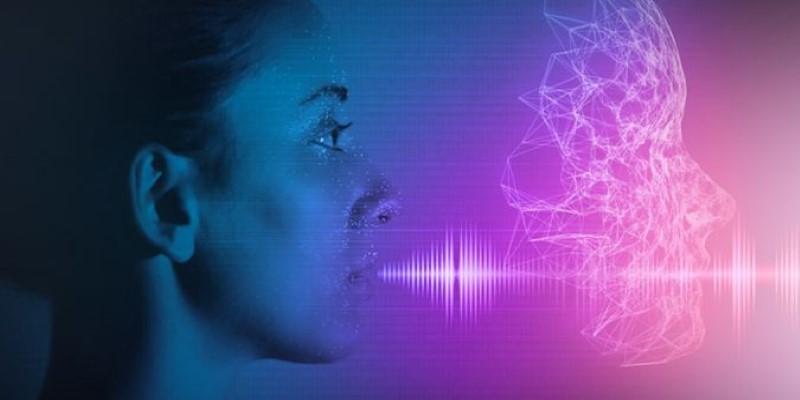
We hear from voice actors who’ve had their voices copied without full consent, and from developers creating AI-generated speech for accessibility tools. At the same time, there are users who rely on custom AI voices to communicate, restoring speech lost through injury or illness.
This documentary walks a careful line. It doesn’t argue that synthetic voice is inherently harmful, but it does show that how it's developed and deployed makes a difference. The stakes are personal, emotional, and increasingly widespread.
My Name Is Not GPT
This film plays with format in a way that sets it apart. My Name Is Not GPT begins with interviews of people using AI systems daily—writers, therapists, educators, parents, students, small business owners, healthcare workers, and language learners—then interweaves these scenes with AI-generated dialogues based on real chatbot transcripts.
The documentary highlights how we instinctively humanize machines, even when we know they aren't conscious. It also explores how this emotional projection influences relationships, expectations, creativity, learning, and decision-making. Can something that only mimics empathy truly help people in need? The film doesn’t dismiss AI’s potential but encourages viewers to remain grounded about its limitations.
Some of the most revealing moments come when humans are asked to guess whether a message came from a person or a machine. The confusion, laughter, and concern speak volumes.
Final Thoughts
These six films give shape to a technology that often feels abstract or inaccessible. They take the idea of artificial intelligence and show what it looks like in practice—in schools, offices, governments, and everyday conversations across different communities. Through clear storytelling and grounded perspectives, these AI documentaries offer more than just information. They offer context, emotion, and deeper cultural insight. None of the films tells us what the future will look like, but each helps us understand the present more clearly. Whether you're curious, cautious, or somewhere in between, these documentaries serve as a lens into the world we're building with machines—whether we're ready or not.