Artificial intelligence isn’t just evolving, it’s reshaping how we think, build, and interact with the world. In 2025, the people driving this transformation aren't just theorists in labs or engineers at the whiteboard. They're pushing practical boundaries, making real-world tools smarter, safer, and faster. Some are household names in tech circles, while others work quietly behind the scenes.
Together, they're changing what machines can do and what society expects from them. This list focuses on individuals whose contributions stand out—whether in foundational models, AI alignment, ethics, or applied machine learning. These names are shaping how AI works and how it’s governed.
12 AI Experts Who Are Reshaping the Future in 2025
Ilya Sutskever – Co-founder, Safe Superintelligence Inc.
After co-founding OpenAI and leading its early research breakthroughs, Ilya Sutskever launched a new chapter with Safe Superintelligence Inc. in 2024. His move marks a shift toward safety-first development, with the goal of building advanced systems that remain understandable and controllable. Known for his work on deep learning, particularly at the core of GPT models, Ilya remains one of the most influential voices in long-term AI safety.
Fei-Fei Li – Professor, Stanford University
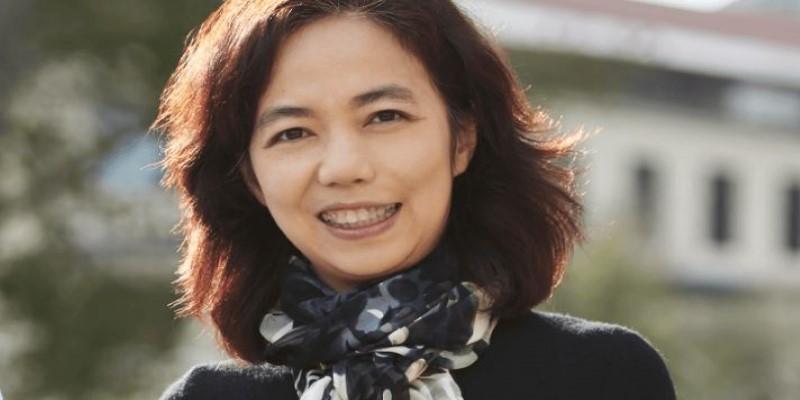
Fei-Fei Li has been a leader in AI for years, particularly in computer vision. She created ImageNet, the dataset that kickstarted deep learning’s rise. In 2025, her focus remains on human-centered AI—making systems that understand context, respect social values, and improve healthcare and education. Her lab at Stanford continues to publish research that blends engineering with ethical thinking.
Yann LeCun – Chief AI Scientist, Meta
Yann LeCun is one of the “godfathers” of deep learning and continues to push new theories on how AI should learn. At Meta, he’s focused on autonomous AI agents that learn more like animals than through brute-force training. LeCun openly challenges current trends in large-scale language models, arguing that the future depends on learning systems that don’t rely on labeled data. His work helps keep the field grounded in longer-term ideas.
Timnit Gebru – Founder, Distributed AI Research Institute (DAIR)
Timnit Gebru leads efforts to bring accountability and fairness into AI. As the founder of DAIR, she’s focused on research that reflects communities affected by AI, not just those building it. Her work in algorithmic bias and documentation standards continues to shape how developers handle sensitive datasets and consider long-term social consequences.
Demis Hassabis – CEO, Google DeepMind
Demis Hassabis has led DeepMind from building AlphaGo to creating generalist agents, such as Gato and the powerful Gemini models. In 2025, DeepMind continues to play a central role in multi-modal systems and scientific discovery through AI, especially in biology and physics. Hassabis is known for steering research with discipline—focusing on general intelligence while keeping an eye on safety and interpretability.
Dario Amodei – CEO, Anthropic
Dario Amodei helped shape early GPT models at OpenAI before co-founding Anthropic. His team introduced the Claude family of language models, which emphasize constitutional AI—training aligned models without reinforcement learning from human feedback. Anthropic’s work centers on predictability, interpretability, and safety, all of which are key for deploying models in the real world. In 2025, his voice carries weight in both policy discussions and model development.
Chelsea Finn – Associate Professor, Stanford University
Chelsea Finn's work focuses on making AI agents that can learn from limited experience—a concept known as meta-learning. She designs systems that adapt quickly, which matters for robotics, healthcare, and environments where gathering tons of data is hard or unsafe. Her research bridges theory and real-world applications, especially in robotics, where flexibility and learning on the fly are still major hurdles.
Geoffrey Hinton – Independent Researcher
Geoffrey Hinton, another “godfather” of deep learning, continues to explore new directions after stepping down from Google in 2023. He has been vocal about the existential risks and unknowns of future AI systems, urging a deeper investigation into how models understand concepts and make decisions. While technically semi-retired, his research and public interviews in 2025 show a restless mind still contributing to core questions in intelligence.
Sara Hooker – Executive Director, Cohere for AI
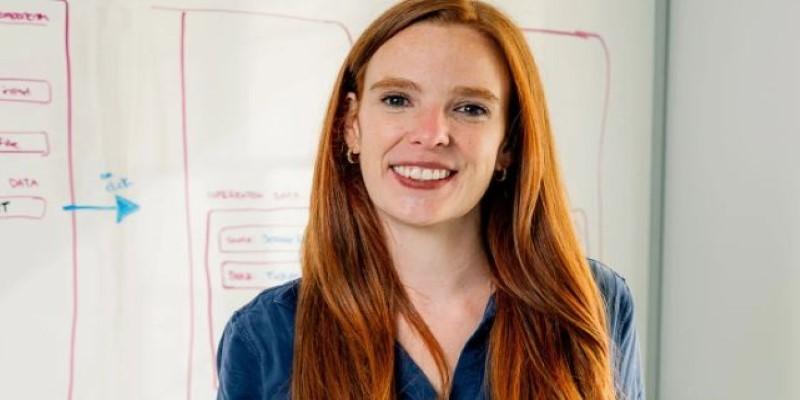
Sara Hooker leads Cohere for AI, an open research lab that builds models and publishes work across language understanding and responsible AI. Her interest in transparent, reproducible research has helped bring large model training out of the black box. She’s also known for supporting underrepresented communities in machine learning and making research more accessible globally. In a field still dominated by big labs, her open science approach makes her work stand out.
Jacob Steinhardt – Assistant Professor, UC Berkeley
Jacob Steinhardt focuses on aligning AI systems with human goals, especially as they grow more complex. His research includes interpretability, robustness, and goal specification—how to make sure an AI understands what humans actually want, not just what we say. In 2025, he’s deeply involved in making alignment more empirical, working on experiments that test alignment strategies in real models.
Subbarao Kambhampati – Professor, Arizona State University
Subbarao Kambhampati has spent years working on planning and human-AI interaction. His work doesn't chase hype; instead, he focuses on core problems, such as common sense reasoning and collaboration between AI and people. He's a strong advocate for keeping AI explanations clear and usable—not just for researchers but for end-users too. In policy and technical circles, his insights are respected for their clarity and experience.
Mira Murati – CTO, OpenAI
Mira Murati leads OpenAI’s technical development, including recent advancements in multi-modal models. In 2025, she’s helping shape how OpenAI’s models are integrated into daily tools. Her work balances model development with safety, accessibility, and policy engagement. She’s involved in everything from architecture design to public-facing rollouts, ensuring that AI tools work well not just in labs but for users in everyday settings.
Conclusion
In a field growing as fast as AI, it’s easy to focus only on the tech: faster models, better benchmarks, bigger datasets. But the real story is about people—those who set the pace, take risks, and challenge assumptions. The top AI leaders and researchers in 2025 aren’t just building tools. They’re shaping the norms, values, and direction of a technology that touches everything from search engines to classrooms to hospitals. Knowing who they are means understanding where AI is heading and who’s steering the wheel.