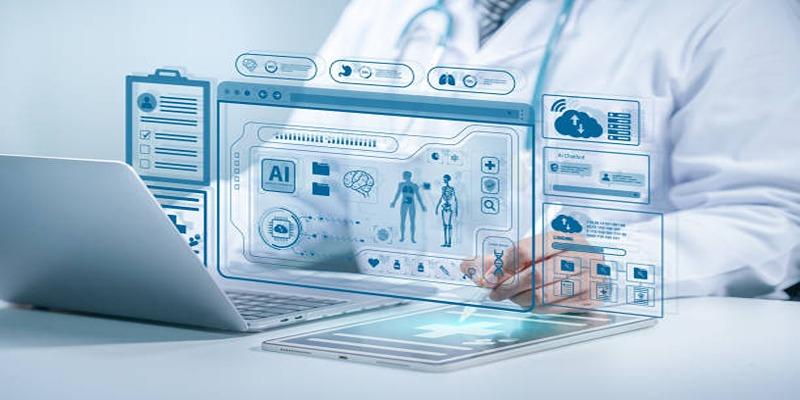
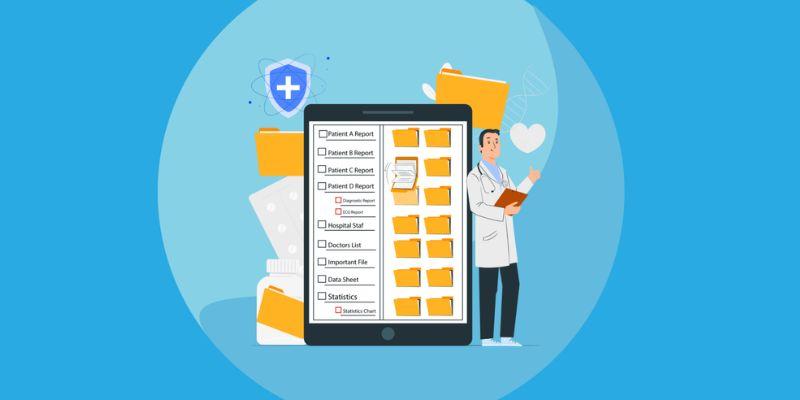
Every day, healthcare professionals are faced with a significant amount of paperwork. Managing papers, including health records, medicines, bills, and insurance forms, requires time, energy, and attention to detail. However, many systems still rely on outdated technology or require manual data entry. This results in longer processing times, increases the likelihood of mistakes, and adds more stress to doctors and personnel.
It also takes time away from direct patient care, which in turn reduces the quality of care. However, AI is developing a smarter approach to solving the problem. AI can read and write papers faster, more precisely, and with less work. This article examines how AI is transforming the way healthcare documents are processed and why it represents a significant shift for the entire industry.

Why Healthcare Document Processing Needs a Change
Every day, healthcare systems generate a large volume of paperwork, including patient records and insurance claims. People have always handled these papers manually or using old systems, which makes things take longer and causes a lot of mistakes. Staff have less time to care for patients because they spend hours inputting, checking, and arranging paperwork. These delayed processes can lead to treatment delays, departments not communicating with each other, and even significant medical errors.
Managing and fixing mistakes also costs money, which makes things even harder. As people demand faster service and healthcare needs increase, the burden of handling documents also rises. Manual processes are no longer sufficient to meet today's needs. A solution that is more efficient, precise, and scalable is needed. That is why changing how documents are processed in healthcare isn't merely a technical update; it's a necessary change to improve treatment for everyone involved.
How AI Works in Document Processing
Machine learning, natural language processing (NLP), and computer vision are among the technologies that AI uses to process documents. Machine learning teaches AI systems to identify and anticipate patterns, such as recognizing patient names, test results, or billing codes. With NLP, the system can read and understand written language, allowing it to comprehend emails and medical notes. AI can scan and understand handwritten forms or printed documents using computer vision. It converts them into searchable digital formats.
AI can sort the information into the right folders, link it to patient profiles, and even mark errors or missing data once it has been extracted. These technologies work together to make it faster and more accurate to handle documents than doing them manually. AI doesn't only read data; it also understands the context and meaning of the data. It helps healthcare professionals save time, reduce errors, and deliver better service.
Benefits of AI in Healthcare Document Management
AI in healthcare document management offers significant benefits, including faster processing, more accurate records, and improved patient care. It works with documents faster than people do, which means staff may spend less time on paperwork and more time with patients. AI also reduces human error, making records more reliable and minimizing medical mistakes. Hospitals can bill more efficiently and receive fewer insurance claim denials when AI handles data entry and document sorting.
It makes things more organized by automatically linking documents to the right patient or department. That makes it easy to retrieve information in an emergency or during a meeting. AI also helps organizations comply with data laws, thereby reducing the risk of lawsuits. It also scales well, making it suitable for use in both small clinics and large hospitals. AI helps lower expenses and improve treatment by making departments work more efficiently. AI makes handling documents less of a task and more of a strategic advantage.
Overcoming Common Challenges
Using AI to process healthcare documents has its benefits, but it also presents challenges that must be addressed. A major concern is the safety and privacy of data. Laws like HIPAA require that patient records be kept safe, and AI systems must ensure this is done. Another problem is that many hospitals still use antiquated systems that may not be compatible with new AI capabilities. It's also essential to train staff on how to use these technologies effectively and avoid errors.
People may also doubt the accuracy of AI, especially in critical situations; therefore, it's essential to establish trust in the technology. Additionally, the initial cost of setting up AI can be significant, particularly for smaller businesses. These problems, however, are not barriers; they can be addressed with effective design, robust security, and ongoing education. AI may be used safely and effectively in healthcare settings if it gets the correct support.
The Future of Document Processing in Healthcare
Advanced AI technologies are very important for the future of healthcare document processing. AI will soon be able to do more than manage documents; it will also be able to use data to make predictions and suggestions. For example, AI can analyze past patient data to identify health trends, suggest diagnoses, or recommend treatment alternatives. Doctors will be able to speak naturally while AI updates the patient's chart in real-time using voice-to-text technologies.
AI will also manage data from wearable devices, emails, and remote monitoring tools, ensuring that records are always up to date. Interoperability will get better, making it easier for hospitals and clinics to share and access information. AI tools are expected to become smarter and easier to use in the future. They will learn from new data and get better over time. As healthcare becomes increasingly digital, AI's role will shift from providing back-end assistance to collaborating in real-time decision-making. This future promises healthcare systems worldwide that are faster, safer, and more connected.
Conclusion:
AI is changing the way healthcare handles paperwork, making things faster, safer, and more accurate. AI helps medical professionals deliver better care to patients by automating manual tasks and reducing errors. It makes it easier to keep track of records, speeds up billing, and makes sure that data regulations are followed more closely. There are challenges, such as privacy concerns and system integration issues, but these can be addressed through effective planning and management. AI tools will play an increasingly significant role in healthcare as they become more accessible and user-friendly.