Machines that can learn and make decisions once sounded like fiction, but they’re now a part of daily life. AI powers tools we use without thinking—voice assistants, search results, smart cameras. Behind these systems are developers who understand how to build and guide them.
Becoming an AI developer isn’t reserved for experts or academics. It’s something you can learn with the right focus, habits, and tools. It doesn’t require perfection, just steady progress, clear goals, and a strong grasp of how data and algorithms interact to solve real problems.
Understand What an AI Developer Actually Does
The term “AI developer” covers a range of roles. Some build models that detect patterns. Others integrate those models into products. Some write research code. Others focus on deploying models to run efficiently at scale. But they all rely on a shared understanding of how machines learn from data.
At the core, AI development is about building systems that use algorithms to improve performance over time. It involves working with machine learning, and often deep learning, to create programs that don’t just follow rules but adjust based on input.
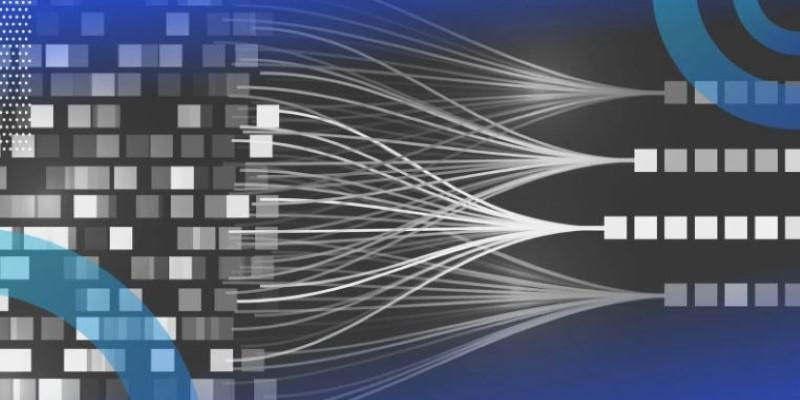
Machine learning uses data to help a system learn how to perform a task. Deep learning, a subset of this, uses layered neural networks that can capture more complex relationships. Developers use these methods for many tasks—speech recognition, translation, anomaly detection, classification, and recommendation systems, to name a few.
The role shares some overlap with data science, especially early on. But while data scientists often focus on understanding trends and explaining them, AI developers are more likely to focus on building and scaling systems that interact with users or other software in real time.
Start with a Solid Foundation in Programming and Math
Before training models or testing algorithms, you need to write clean, logical code and understand the math that supports machine learning. Python is the standard starting point. Its flexibility and broad library support make it the language of choice in most AI workflows. Libraries like NumPy, Pandas, Scikit-learn, TensorFlow, and PyTorch make it easier to build, test, and deploy models.

But AI development isn’t just about syntax or libraries. The math behind it—linear algebra, calculus, probability, and statistics—explains how models learn and update. For example, understanding how gradients work helps explain how neural networks improve during training. Probability explains how predictions are made under uncertainty.
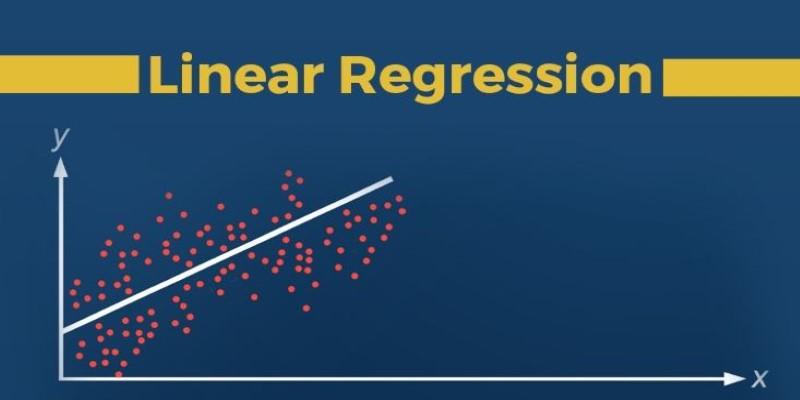
You don’t need to master every formula, but you should understand what the tools are doing. Practice helps more than memorization. Write a simple linear regression from scratch. Build a small neural network using only NumPy. These hands-on exercises help connect theory to practice.
When you hit a roadblock, it’s usually tied to a gap in either code logic or math understanding. Filling those gaps makes you a stronger developer and lets you debug more confidently.
Build Real Projects and Learn by Doing
The best learning happens when you try to solve a real problem. Start small. Build a program that classifies emails as spam or not. Train a simple recommendation system. Use public datasets to predict housing prices, detect fake news, or classify images. Each project teaches you something different—data wrangling, model tuning, evaluation techniques, and more.
You’ll also face common issues like missing data, class imbalance, or noisy inputs. These aren’t distractions—they’re part of the job. Solving them builds practical skill.
Real projects give you more than knowledge—they give you proof. Use platforms like GitHub to share your code. Comment on your thought process. What did you try first? What failed? What worked better? Employers, collaborators, and peers want to see how you think, not just your final results.
Learn to test your code, track experiments, and document your steps. These habits matter when your work goes into production. AI systems don’t run in isolation—they’re part of larger systems with expectations around reliability, speed, and security.
Joining coding communities or competitions like Kaggle can also help. You'll see how others solve the same problems, and you'll get feedback that helps you grow. It's not about ranking high; it's about learning from the process.
Stay Current and Be Ready to Adapt
AI changes quickly. New papers, tools, and ideas come out every week. What was standard two years ago might be outdated now. That doesn’t mean chasing every trend—but it does mean staying alert and learning continuously.

Set aside time to explore. Read blog posts that break down recent research. Watch talks or tutorials. Try new libraries in small projects. Follow developers and researchers who explain things clearly. A few trusted sources can help you filter signal from noise.
Instead of learning a little about everything, go deeper into one area. Natural language processing, computer vision, or time-series forecasting—pick something that interests you and try to get good at it. Understanding one domain deeply gives you a framework for learning others more easily.
When things don’t work, keep going. A lot of AI development is trial and error. Models behave differently on different data. Sometimes what should work doesn’t, and what seems simple performs well. This is where consistency matters more than talent.
If your goal is a job, look at real job descriptions. Identify what companies expect—frameworks, deployment tools, cloud platforms. Tailor your learning to fit those expectations, and use your projects to demonstrate those skills.
Conclusion
Becoming an AI developer takes time, but it follows a clear pattern. You learn the basics of coding and math. You build things that don’t always work. You ask questions, study patterns, and adjust. With each cycle, you learn more about the tools, the techniques, and the mindset required. You don’t need to be perfect or have every answer. What matters is building things that solve problems, learning from the process, and staying curious. If you keep showing up and doing the work, the title of “AI developer” becomes less of a goal and more of a description of what you already are.